Highway Lay-By vs Paved Shoulder in India: Where Can Drivers Stop Safely?
Highway Explainer: A truck lay-by and a paved shoulder may look like similar roadside spaces, but they serve different purposes. Knowing the distinction helps drivers avoid dangerous stops on busy national highways.
At a glance
- A lay-by is a purpose-designed stopping or parking area separated from the flow of traffic.
- A paved shoulder is the surfaced strip alongside the carriageway, principally useful for emergency refuge and road safety.
- Neither feature gives permission to ignore posted signs, local restrictions or traffic police directions.
What is a highway lay-by?
A lay-by is an area set aside from the through lanes where vehicles can pull off the road. Its exact design and permitted uses vary by location. Some are intended for trucks, others for buses or short stops. The Ministry of Road Transport and Highways has specifically emphasised suitably designed truck lay-bys and truck parking areas to discourage unsafe roadside parking on high-speed roads.
Look for a marked entrance, appropriate signs and a clearly designated stopping space. A truck lay-by is not automatically an overnight parking facility, and drivers should follow any vehicle-class or time restrictions shown on site.
What is a paved shoulder?
A paved shoulder runs next to the main traffic lanes. It provides lateral clearance and, where safe and permitted, a refuge for a vehicle that cannot continue because of a breakdown or other genuine emergency. It should not be treated as a regular parking lane, a place for meal breaks or an overtaking lane. The amount of usable shoulder and its suitability for stopping vary greatly by highway section.
Lay-by versus shoulder: practical differences
| Feature | Lay-by | Paved shoulder |
|---|---|---|
| Position | Designated stopping area off through lanes | Adjacent to carriageway |
| Typical purpose | Controlled stopping or parking as signed | Emergency refuge and roadway safety |
| Routine rest stop | Only where permitted | Not appropriate |
| Access | Use marked entrance and exit | Only when stopping is unavoidable and safe |
What should you do if your vehicle breaks down?
- If the vehicle remains driveable, aim for a safe designated stopping area rather than stopping in a live lane.
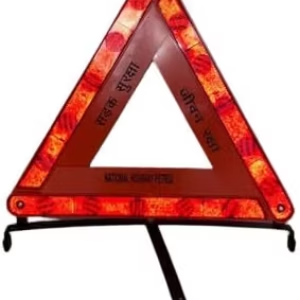
- If it cannot move, switch on hazard lights, assess traffic and move as far away from moving vehicles as safely possible.
- Do not stand behind the vehicle or walk along a high-speed carriageway. Keep passengers away from live traffic if a safe protected location is available.
- Request assistance and give the highway number, direction of travel, nearest kilometre marker, landmark or toll plaza.
- Follow instructions from highway patrol, emergency responders and traffic police. Never attempt repairs in an exposed traffic lane.
For more preparation, see our guide to highway chainage and kilometre markers and how to report a highway accident. Drivers should also understand service-road access and U-turn safety.
Why do highway designers provide lay-bys?
Roadside stopping creates conflict between stationary vehicles and fast-moving traffic. In its road-safety engineering circular of 19 October 2015, MoRTH highlighted the need for truck lay-bys and truck parking areas to avoid roadside parking. A separate MoRTH circular of 23 March 2018 discusses passing places and temporary lay-bys on certain intermediate-lane roads, including sight-distance and location considerations. These documents explain design principles; they do not mean every highway has a lay-by at fixed intervals.
Before your next highway trip
Plan breaks at signed rest areas, fuel stations or permitted lay-bys. Never assume that an empty shoulder is a safe place to stop. The Humsafar wayside amenities guide explains another option for planning rest stops. For National Highway services and complaints, consult the official Rajmargyatra portal.
Official references
- MoRTH: Road Safety Engineering Measures, 19 October 2015
- MoRTH: Amended geometric design circular, 23 March 2018
This is an educational explainer, not a live road-status advisory or a new government announcement. Actual stopping rules depend on road signs, site conditions and applicable traffic regulations.